Melodyne Ara Izotope Rx
Prepare your vocal for mixing
The first stage is preparing the vocal for mixing by combing through the tracked vocal with our eyes and ears, paying special attention for clicks, pops, hum; any number of sonic anomalies that should be dealt with before we start mixing. The best environment for this kind of work is the standalone editor in RX 7 Standard. This unique visual environment gives me way more information than a waveform display would in a typical digital audio workstation.
It is possible to use iZotope RX in two different ways: as an adjunct to a DAW, or in stand–alone mode. Even in RX2, there was already a facility which enabled Spectral Repair as a plug–in from within a DAW. In RX4 this has been replaced by a more fully featured ‘round trip’ capability called RX Connect. The latest version of iZotope’s best-selling restoration software adds powerful new modules, as well as a Post Production Suite bundle aimed at film and TV applications. It seems that along with Christmas, another regular annual event we can rely upon is a new version of iZotope’s RX Audio Editor software.
IZotope RX 2 Help Documentation 10 Interface Here is a general overview of RX's main workspace. It's a good idea to familiarize yourself with this window before moving on. RX's interface is design ed to give you a full range of tools for repairing audio. In addition to its processing modules, RX provides a. Nov 02, 2018 50+ videos Play all Mix - Using Pitch Correction on Vocals with Melodyne 4 essential and Nectar 3 YouTube 5 VOCAL TUNING MISTAKES (How to Use Melodyne 4) - Duration: 16:07. Musician on a Mission.
To import audio into RX, open the application, head to file, open and choose the file you want to import. Maybe the issue that stands out is some breathiness in a specific section and wind-rustling on the mic. We should take care of it before it hits a compressor or limiter in the mixing stage, which will certainly bring attention to it.
Clean Up
I’m going to turn on instant process mode and choose gain as my processor. Choosing gain as my processor means that when I set the gain module’s parameter to, let’s say, -30 dB, anything I select with one of the tools here will go down by -30 dB. Now that I’ve chosen on my settings, I’m going to start brushing away at where I think the breathiness is.
Because RX is a bit like an image editor for your audio, I can choose the brush tool and start painting away the breathiness.
As a tip, if you encounter an issue like this in your tracked vocal, it’s well worth it to shuttle over to similar parts of the vocal performance (say, other choruses in this song), where this problem could be repeating, so you can tackle it.
Breath Control
To take care of breaths, I’m going to use RX 7 Breath Control, which intelligently detects breaths in dialogue or vocal recordings and suppresses them. Removing and reducing breaths in recordings can be a time-consuming process for music producers, but more often than not it’s a procedure that has to be done. Luckily, Breath Control can help reduce the time spent on repetitive editing without sacrificing the quality of your dialogue or vocal recordings. I should mention that included in Nectar 3 is the plug-in version of this module, so if you want to use Breath Control in real-time on your track, simply head to your plug-in folder in your DAW of choice, navigate to the iZotope plug-ins and look for RX 7 Breath Control.
Let's use Breath Control to identify and attenuate breaths. The parameters here are really simple: Sensitivity dictates how aggressively the plug-in is looking for breaths, the target level is how hard we’re pushing the identified breaths down.

You’ll have to find some settings that work for you, and the vocal your working on, but a great way to check and make sure that the module is only picking up the sound of breaths, and that you have your parameters in place, is to use the ‘output breaths only’ function, you'll only hear what the module is detecting. It’s always a good idea to go back and listen once you’ve rendered the file, so make sure everything’s sounds great.
Mouth De-click
Mouth clicks and pops are very common, especially when a singer is delivering an intimate performance where words are slowly and carefully articulated. It can also be the case that the singer has performed a number of takes and might be slightly dehydrated as a result. Let’s use Mouth De-click to tackle this problem. I’ll find it over here on the right. And you’ll notice a familiar feature: 'output clicks only.'
Just like Breath Control, if you want to use this module across the entire audio file to remove all the mouth clicks, just make sure to have a listen post-processing to double check that all the clicks have been removed as sometimes loud clicks mask quieter clicks and the quieter clicks will need an extra rendering to be removed.
Melodyne 4 essential
I’ve imported my vocal track into my session, and now I need to do a little tuning work.
Tuning a vocal is a common step in preparing just about any track featuring vocals for the market, and lucky, Melodyne 4 essential is bundled with Nectar 3, meaning Nectar 3 owners get access to industry-standard time and pitch correction software used by pros the world over.
Thanks to ARA which stands for Audio Random Access, Melodyne and in this case, Logic, work more closely and efficiently together. All I have to do to start tuning this vocal is open Melodyne on my vocal track.
Note Location
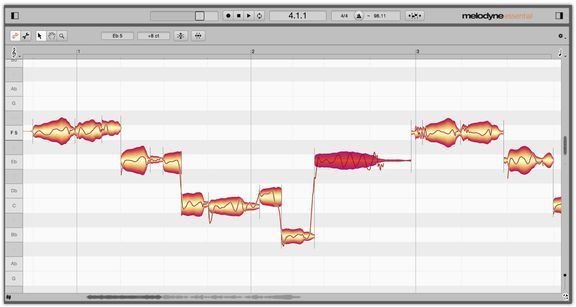
A great way to see where the notes should be according to the scale Melodyne automatically detected when you played audio, is to go to Options, Note Editor and then click 'Show Intended Notes.' When you’re doing your tuning work, this feature can be a helpful visual guide, in addition to using your ears, of course.
To correct the pitch of the sung notes, the one way for me to do this is to select some notes that I feel are out of pitch with the rest of the track by clicking and dragging them to the correct position using my eyes and ears.
Virtual dj pro 7 mac price. I’m going to go through the rest of the vocal track, using my eyes and ears to determine what else needs to be tuned, but the great thing about ARA is that when I’m finished with my tuning work I don’t have to bounce or print the track before I can keep mixing, I can keep Melodyne ARA parked on the track with no latency. Let’s started mixing with Nectar 3.
Nectar 3
Now that your track is prepped and tuned, it’s time for mixing. I’m going to open Nectar 3 on the insert below the Melodyne ARA, and jumpstart the mixing process using Vocal Assistant. It’s always a good idea to run a pass of Vocal Assistant over a portion of the vocal that has a lot of energy.
Unmask
We can eliminate the EQ guesswork and use the new Unmask feature in Nectar 3 to help automatically create a pocket for the vocal.
For unmask to work, it requires a source of masking. Unmask can hear where masking is occurring between the vocal and the source and introduce an EQ curve.
Izotope Rx 7 Audio Editor Advanced
Unmask listens to the selected source and the current vocal track and compares them to detect the presence of masking. If masking is detected, a static EQ curve will be applied to the instance selected in the Unmask dropdown.
Melodyne Ara Izotope Rx Reviews
Insight 2
Insight 2 is a comprehensive metering suite that’s included in Music Production Suite 2. If you click on the Layout tab you can see that you've added.
This layout is ideal if you’re keeping an eye on loudness patterns in your track, and if you want to keep an eye on the overall frequency composition of your track.
Insight 2 is totally modular and resizable, so if I want to add a few different modules to this layout, I can simply click. I can even resize the whole module or the modules contained within the main window.
| Greetings All, In Cakewalk's Sonar, one could add an editor like RX or SoundForge to the Tools drop-down menu via a few lines in the Windows Registry. This allowed you to select a clip (or full track) in Sonar and port it over to RX for editing. (RX would auto-launch and open the file all with one click.) When editing in RX was finished, saving the file and closing RX prompted Sonar to ask: 'the file has changed, import new file?' and selecting 'Yes' re-imported the edited file back into it's track in Sonar. It worked like magic, was darn-near seemless, and was a great way to share a file out to a better editor like RX Advanced. Is that possible in Studio One Pro? I've already seen the 'Expert' video where he uses the RX Monitor plugin, but honestly.. that is a bit of a kluge compared to the process above. Thanks, (Long Time Cakewalk User) Windows 10 Pro x64 running on a custom ADK Pro Audio tower PC with Intel i7 (12 Core), 32GB RAM, 1TB drive for audio, (2) 2TB System & Storage drives, (1) UAD2 Octo, (2) UAD2 Quad, Lynx Aurora 16/AES16e, AMD Radeon HD 7700 Video Card |
| Nothing that I know of, but that does sound sweet. Lets see if I can get some of the smart kids in here to see such a hack is possible. Matt Lenovo ThinkServer TS140 Win 10 64bit, 8GB RAM, Intel Xeon Lenovo Thinkpad E520, Windows 7 64bit, 8 GB RAM, Intel i5 Processor S1Pro V4 |
| Thanks Matt. Yes sweet it was, and it was as though the two were ARA integrated like SOP with Melodyne and Vocalign.. I can dig up the instructions to alter the registry if anyone is interested. I originally saw it posted by Scott Garrigus (AKA: DigiFreq) who wrote books on Cakewalk, and someone else had added a line ot two after that. I'll miss those brainiacs, but maybe there are a few hanging here, eh? Thanks again. -- Windows 10 Pro x64 running on a custom ADK Pro Audio tower PC with Intel i7 (12 Core), 32GB RAM, 1TB drive for audio, (2) 2TB System & Storage drives, (1) UAD2 Octo, (2) UAD2 Quad, Lynx Aurora 16/AES16e, AMD Radeon HD 7700 Video Card |
| You could maybe do something - similar - in Studio One, but not via the registry and file sharing will likely come into play. I'll explain.. - You could add a new menu and function via the scripting interface. - You could make that function launch any third party application like an audio editor. - You could probably (I'm 90% sure) somehow also get the source file name and path of the selected clip to pass to the editor to also load when you launch it. The problem is with file sharing, whether or not you could save that edited file while it's still open in Studio One. I don't believe that can happen without some underlying process allowing it. |
| This would be awesome as the RX are doing wonders on vocal for me !! Windows 10 64bit Home, Studio One 3.5.6, Studio One 4.6.0, Cubase 10.5 Pro , Logic, Pro Tools, MacBook Pro, 24.4.2, 16.0.2, Project, Studiolive III 32, Midas 320, Yamaha MGP32X, Faderport 1+8, Mackie MCU, Softube Console 1, Yamaha SY 55, DSI Mopho, JU-06, ARP Odessey, Impulse 49, NI Maschine Mk.3, Atom, NI Komplete S61, Adam V7’s, KRK VXT 8´s, SE Electronics HP6, CME 61, Nocturn 25, UAD Plugins, TC Touch, UAD Apollo Twin USB/TB Duo, Satellite Quad, TB Octa, UA 6176, Warm Audio 76, JoeMeek MC2, DBX 266XS, TC C300, TC 2290, Yamaha REV 7. Toontrack. |
| Thanks for the input Lawrence. I'll take a look at that scripting. I've read somewhere that the file sharing is not as flexible in SOP. Maybe iZotope will take a good long look at ARA and some form of RX Editor via ARA is in our future. Then we can all live blissfully ever after..!! And yes Klypeman - it was truly THE way to work, as RX just keeps getting better.. The RX Monitor did not work so well in Sonar, as it's designed for Protools, but one did not need it once RX was added to the Tools menu. It was killer. Windows 10 Pro x64 running on a custom ADK Pro Audio tower PC with Intel i7 (12 Core), 32GB RAM, 1TB drive for audio, (2) 2TB System & Storage drives, (1) UAD2 Octo, (2) UAD2 Quad, Lynx Aurora 16/AES16e, AMD Radeon HD 7700 Video Card |
Melodyne Ara Izotope Rx 7
| That sounds like a great workflow. I've been trying to achieve something like this through macros, but this would be so much better. Especially the re-importing sounds wonderful. If this whole process were more convenien, I'd use external editors 100 times per day instead of just a handful. Could you have more than one editor in this menu in Sonar, f.i. both RX and Wavelab? |
| Skaperverket wroteThat sounds like a great workflow. I've been trying to achieve something like this through macros, but this would be so much better. Especially the re-importing sounds wonderful. If this whole process were more convenien, I'd use external editors 100 times per day instead of just a handful. Yes - I had Sony's Sound Forge loaded before I got RX, then I updated Sound Forge to Pro, and it was WONDERFUL having both SFP and RX in Sonar's 'TOOLS' drop-down menu. I'm not holding my breath for some form of integration with SOP, but IF the programmers were to reach out to iZotope, having that feature would put them LIGHT YEARS ahead of other DAWs.. R.I.P. Cakewalk.. Windows 10 Pro x64 running on a custom ADK Pro Audio tower PC with Intel i7 (12 Core), 32GB RAM, 1TB drive for audio, (2) 2TB System & Storage drives, (1) UAD2 Octo, (2) UAD2 Quad, Lynx Aurora 16/AES16e, AMD Radeon HD 7700 Video Card |
| Thanks for answering! It kind of reminds me of how I used to use the feature 'Use External Waveform Editor' when I started out with good old Digital Performer. Don't think it would let us link multiple editors, though. Sonar sure had a good thing going. Hope other DAWs take notice! |
| There is a feature request for integrating an external editor into Studio One. Please everyone, vote it up. I too was a Sonar user and loved accessing Sony Sound Forge in this way.😎 Mackjohn Studio One 3.5 MOTU Ultralite MK3 Hybrid Windows 10/64 Intel i7 CPU, 16 GB RAM Dual Screen Monitors ADK Pro Audio built Computer |
Who is online
Users browsing this forum: No registered users and 21 guests